What are veins?
Veins are the blood vessels that bring blood back to your heart. After blood has delivered oxygen and nutrients to the tissues, it collects in small vessels that join up into larger and larger veins, eventually reaching the heart, which sends it to the lungs for oxygen and then out again through the arteries. Together the arteries, veins and tiny capillaries between them form the circulation.
The word venous simply means “to do with veins”. When doctors talk about a venous condition, venous flow or venous disease, they are talking about this return system.
Veins versus arteries
Blood veins and arteries do different jobs, so they are built differently.
| Arteries | Veins | |
|---|---|---|
| Direction of flow | Away from the heart | Towards the heart |
| Pressure | Higher, pulsing | Lower, steady |
| Walls | Thick and muscular | Thinner and more stretchy |
| Valves | Not usually | Present, especially in the legs |
| Position | Often deeper | Deep and just under the skin |
Because vein walls are thinner and the pressure is low, veins can stretch, which is why they can become enlarged when something goes wrong.
The challenge in your legs
Blood in your legs has to travel upwards, against gravity, back to the heart. This is especially demanding when you are standing or sitting still. Your body solves it with two features.
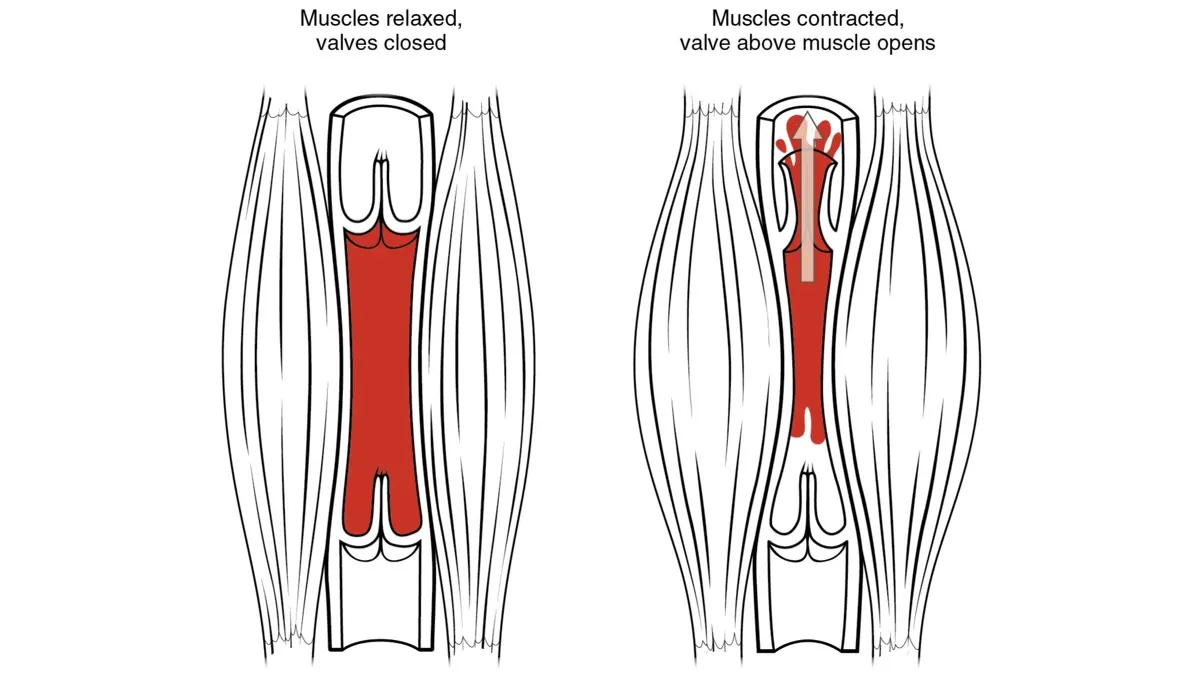
One-way valves. Inside leg veins are small flaps, arranged like tiny doors. They open to let blood flow up and close to stop it falling back down.
The calf muscle pump. The deep veins run through the calf muscles. Each time you walk or flex your ankle, the muscles squeeze the veins and push blood upwards, and the valves keep it from slipping back. This is why walking is good for your veins and why long periods of standing or sitting without moving can make legs feel heavy.
Deep and superficial veins
The leg veins form two connected networks:
- Deep veins lie inside and between the muscles. They carry most of the blood back up the leg.
- Superficial veins lie just under the skin and are the ones you can sometimes see. They collect blood from the skin and drain into the deep system.
- Perforator veins are short connecting channels that link the two networks, with valves that normally direct blood from the surface to the deep system.
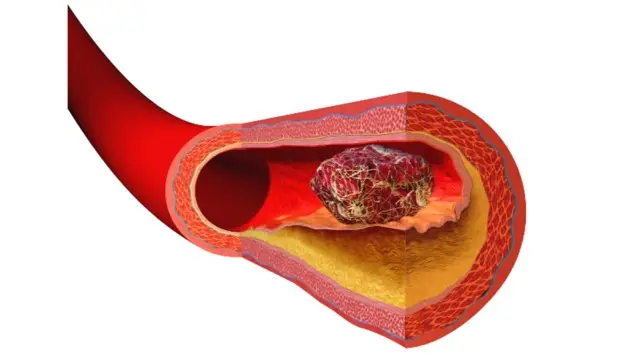
Superficial veins are the ones that become varicose, while deep veins are where a dangerous clot (a deep vein thrombosis) can form. Our guide to blood clots explained covers clots in more detail.
When veins stop working well
Several things can go wrong:
- Valve failure. If valves weaken, blood flows backward and pools, raising pressure in the vein. This is called reflux. It is the cause of most varicose veins and of chronic venous insufficiency.
- Weak vein walls. Walls that stretch too much stop the valves meeting properly.
- Blockage. A clot or narrowing can obstruct flow, causing swelling and pain. A clot in a deep vein is a medical emergency.
- Surface changes. Tiny superficial veins can enlarge to form spider veins, which are usually harmless and cosmetic.
Risk factors include family history, age, pregnancy, prolonged standing or sitting, excess weight and a past clot. You can read more in our article on whether varicose veins are genetic.
How veins change across life
Veins are not fixed. Pregnancy loosens vein walls and increases blood volume, which is why many women notice new veins during or after pregnancy. With age, vein walls and valves lose some elasticity, and years of gravity add up. Jobs that involve standing in one place, such as in retail, healthcare, hawker stalls or teaching, can place extra demand on the calf pump. Warm weather makes veins widen, so legs often feel heavier in hot, humid conditions. None of this means your veins are faulty; it simply explains why vein symptoms are so common and tend to rise with age.
How doctors look at veins
Doctors learn about vein function by examining your legs while you stand and by asking about symptoms, family history and past clots. The most useful test is a duplex ultrasound, which uses sound waves to show the structure of the veins and the direction of blood flow, including whether valves leak or a clot is present. It is painless and does not use radiation. We explain more in our guide to chronic venous insufficiency.
Looking after your veins
Simple habits support healthy circulation:
- Keep active, with regular walking
- Move your ankles and calves if you must sit or stand for long periods
- Raise your legs when resting
- Maintain a healthy weight
- Avoid very tight clothing that restricts flow
These steps help vein health in general but do not guarantee that problems will not develop, especially if they run in the family. Our prevention guide goes deeper.
What visible veins can tell you
Many people have visible veins that are normal, particularly on the hands, forearms and feet (see bulging veins in the hands and arms for when to worry). But signs worth noticing in the legs include twisted or bulging veins, aching or heavy legs, swollen ankles, itchy or discoloured skin and sores near the ankle. Our articles on bulging veins in legs and swollen ankles explain what these may mean.
When to see a doctor
See a doctor if you have leg veins that are painful, bulging or twisted, legs that ache or swell regularly, skin changes near the ankle or a sore that does not heal. Seek urgent care for sudden swelling, pain and warmth in one leg, and call 995 if it comes with chest pain, breathlessness or coughing blood, as these may signal a clot.
If you are unsure, take the vein symptom check, read how to find a vein specialist or browse the glossary. This article is general education and does not replace medical advice.
Frequently asked questions
What does venous mean?
Venous means relating to the veins. A venous problem is one affecting the veins, and venous blood is blood travelling back towards the heart through them.
What is the difference between veins and arteries?
Arteries carry blood away from the heart under higher pressure and have thick, muscular walls. Veins return blood to the heart under low pressure, have thinner walls and, in the legs, contain valves. Most arteries carry oxygen-rich blood and most veins carry blood with less oxygen, with the lungs as the exception.
Why are my veins visible?
Veins close to the skin can show through, especially in people with pale or thin skin, after exercise, in warm weather or with age. Visible veins are often normal. Veins that are bulging, twisted or painful are worth having checked.
What are blood veins made of?
Vein walls have three thin layers: an inner lining, a layer of muscle and elastic tissue, and an outer layer of connective tissue. Leg veins also contain small flap-like valves.
Which veins can cause problems?
Both networks can. Superficial veins can become varicose or inflamed, while deep veins can develop clots. Valve failure in either can lead to chronic venous insufficiency.
Sources and further reading
This article is general information, not personal medical advice. Please speak to a doctor about your own symptoms. How we create our content.