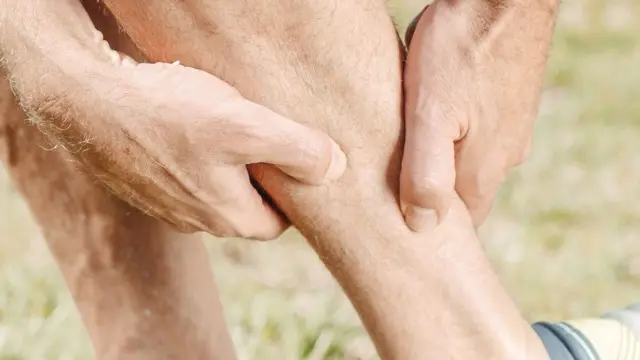
Seeing bulging veins in legs that are not varicose can be confusing. The veins look raised and blue or green, and the first thought is often that something is wrong. In many cases nothing is. Veins sit close to the surface in the legs, and several ordinary factors can make them more visible. This page explains the common harmless causes, how disease looks different, and when it is worth getting checked. It is educational and cannot diagnose you.
Why veins bulge in legs without being varicose
Veins carry blood back towards the heart. In the legs they work against gravity, helped by one-way valves and by the calf muscles squeezing as you walk. A vein can look prominent without its valves failing. Common reasons include:
- Low body fat and thin skin. Slim people, and many athletes, have little tissue over the veins, so healthy veins show clearly. Skin also thins with age, making veins more visible.
- Exercise. During and after a workout, blood flow to the legs rises and the working muscles press on nearby veins. Veins can look larger for minutes to hours. This is common in runners, cyclists and people who lift weights.
- Heat. In warm weather and after hot showers or saunas, veins widen to lose heat. This matters in Singapore and across Southeast Asia, where it is warm all year.
- Standing for long periods. Blood pools in the lower legs after hours on your feet, so veins can swell towards the end of the day and ease overnight.
- Family traits. If your parents or siblings have prominent veins, you may too, even with perfectly working valves.
- Pregnancy and hormones. Extra blood volume and hormone changes can enlarge veins temporarily. Some of this settles after delivery.
- Weight changes. Losing weight can make veins easier to see, while carrying extra weight can raise pressure in the leg veins.
None of these reasons involves a damaged valve. The veins look big, but blood still flows in the right direction.
What varicose veins look and feel like
Varicose veins are different because the valves inside the veins no longer close properly, so blood flows backwards and pools. This is called venous reflux. The vein stretches and becomes twisted.
Typical features include:
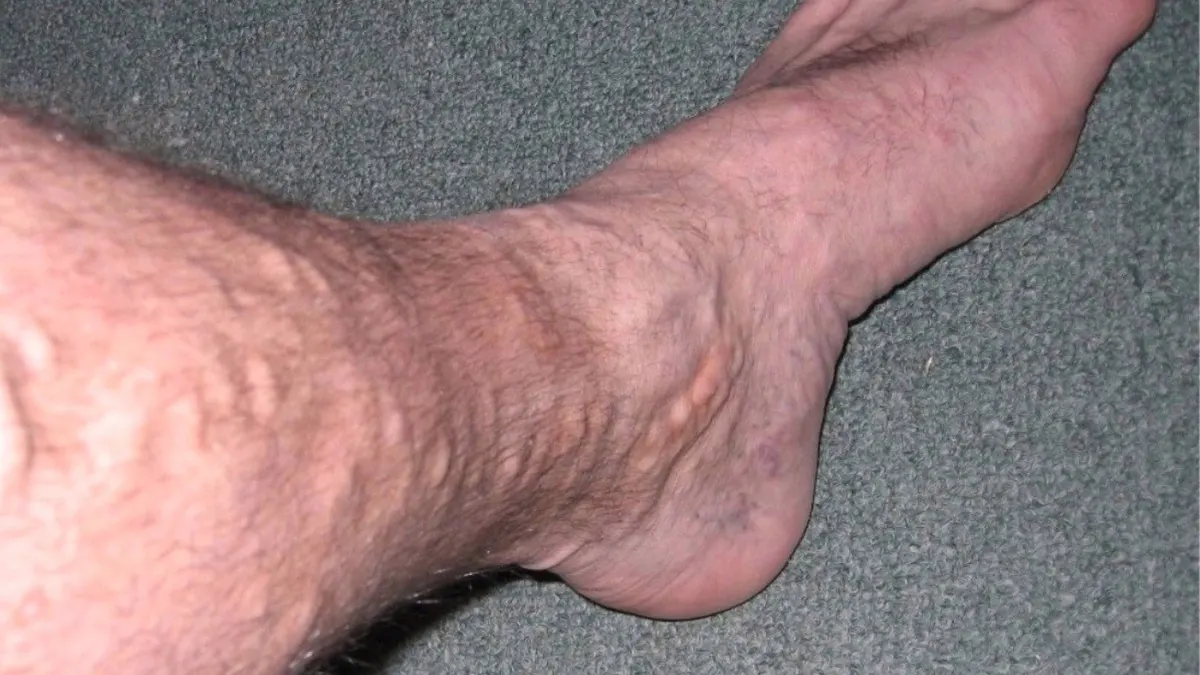
- veins that are raised, knotted, rope-like or winding, often blue or purple;
- veins that stay enlarged even when you are lying down or cool;
- an aching, heavy or throbbing feeling, usually worse at the end of the day;
- ankle swelling, night cramps or restless legs;
- itching or irritated skin over the veins;
- skin darkening, a rash or shiny skin near the ankle.
Guidelines such as NICE CG168 describe varicose veins as swollen, twisted veins that are generally at least 3 mm wide. You cannot measure that reliably at home, which is why a scan is used. Our guide to the stages of varicose veins shows how the condition can progress.
Bulging veins versus varicose veins: how to tell
No single look is decisive, but these questions help.
Do the veins go down when you lie down and raise your legs? Harmless prominent veins often flatten a lot. Varicose veins usually stay enlarged, though they may reduce a little.
Do you have symptoms? Veins that cause no pain, heaviness, swelling or itching are less likely to be a problem. Symptoms alongside bulging veins point more towards reflux.
Are the veins new or changing? Veins you have always had are less concerning than veins that have recently enlarged, multiplied or become tender.
Is the skin normal? Brown staining, eczema, hardened skin or a healed or open sore near the ankle are signs of longer-term vein pressure.
Is there a family history? This raises the chance of true varicose veins, but also of harmless prominent veins, so it does not settle the question on its own.
Fine red or blue web-like lines are a separate issue, usually spider veins, which are mostly cosmetic. See spider veins versus varicose veins for the difference.
Other reasons for big veins in legs
Occasionally, big veins in the legs have a cause outside the leg itself.
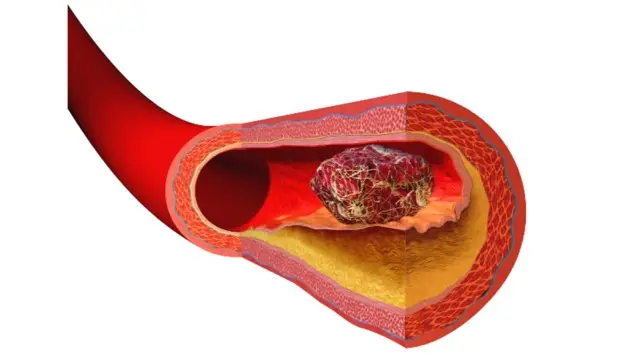
- A previous deep vein clot. After a clot, blood may be rerouted through surface veins, which then enlarge. This can appear as new, widespread visible veins.
- Pelvic or abdominal vein problems. Rarely, a blockage or compression higher up can force blood through enlarged veins in the groin, thigh or lower abdomen.
- Heart or kidney conditions. These can cause fluid build-up and make legs swell, which can change how veins look. The swelling usually affects both legs.
- Superficial thrombophlebitis. A clot in a surface vein produces a hard, red, tender cord. It is inflamed rather than just bulging.
If veins have appeared suddenly, are only on one leg, or are accompanied by swelling, they need a proper assessment.
How doctors check bulging veins
If you see a doctor, expect a conversation about your symptoms and family history, followed by a look at your legs while standing. The standard test is a duplex ultrasound scan, which uses sound waves to show the vein walls, valves and the direction of blood flow. NICE CG168 recommends it for people with suspected varicose veins, and the ESVS 2022 guideline also supports duplex ultrasound as the key test for chronic venous disease.
The scan is painless, takes a short time and involves no needles. If it shows normal valves, you can usually be reassured. If it shows reflux, you can discuss options with your doctor, including whether treatment is needed or whether compression stockings and lifestyle measures are enough. See varicose vein treatments compared for an overview.
What you can do at home
If your veins are painless and the scan, or your doctor, says they are harmless, a few habits are still helpful:
- Keep moving. Walk regularly and flex your ankles if you sit for long periods.
- Take short breaks from long standing and put your feet up when you can.
- Aim for a healthy weight.
- Avoid very tight clothing around the thighs or groin.
- Consider compression stockings if your legs feel heavy or swollen by evening. Our compression stockings guide explains how to choose them safely.
For more ideas, see how to prevent varicose veins. Habits cannot remove veins that already bulge, and creams and massage do not repair valves.
When to see a doctor
Call 995 immediately if you have a swollen, painful, warm leg together with sudden chest pain, breathlessness or coughing blood. These can be signs of a clot that has travelled to the lungs.
See a doctor soon if:
- the veins are new, getting bigger, or are on one leg only;
- you have aching, heaviness, swelling, cramps or itching in the legs;
- the skin near your ankle is darkening, hardened, inflamed or has a sore;
- a vein is hard, red and tender, or has bled;
- you are unsure and want a scan to know where you stand.
If your veins are painless, long-standing and unchanged, there is usually no urgency, but you can still ask for a check at a routine visit. Our vein symptom check can help you organise what you have noticed, and our guide to finding a vein specialist explains what to look for.
Frequently asked questions
Why do the veins bulge in my legs when I stand or exercise?
Standing lets blood pool in the legs, and exercise increases blood flow and pushes the muscles against the veins. Both can make healthy veins look larger for a while. If the veins settle after rest and you have no other symptoms, this is usually normal.
Are big veins in my legs always a sign of a problem?
No. Big veins can simply be a family trait, a result of low body fat or a sign of strong muscles. They matter more when they are new, enlarging, painful or come with swelling and skin changes.
Can bulging veins in the legs be a clot?
Sometimes. A hard, tender, red cord along a vein may be a clot in a surface vein, and a warm, swollen, painful leg may be a deep vein clot. These need prompt medical review.
Do I need a scan for bulging veins?
Not if the veins are painless, unchanged and you have no other symptoms. If you have symptoms or the veins are new or changing, a duplex ultrasound is the standard test.
Sources and further reading
This article is general information, not personal medical advice. Please speak to a doctor about your own symptoms. How we create our content.