Call 995 straight away if you have:
- sudden chest pain or tightness
- sudden shortness of breath or fast breathing
- coughing up blood
- a racing heartbeat, feeling faint or collapsing
- one leg that is suddenly swollen, painful, warm or red
These can be signs of a blood clot in the lungs or a deep leg vein. Do not drive yourself.
VTE is short for venous thromboembolism. It is a blood clot problem in the veins, and it includes two linked conditions: deep vein thrombosis (DVT), a clot in a deep vein, and pulmonary embolism (PE), where part of a clot travels to the lungs. You may see the abbreviation in hospital leaflets, on consent forms before surgery, or in news about long flights. This page explains what VTE means in plain English, who is more at risk, and how it is prevented. It does not replace a medical assessment.
What does VTE mean? The medical abbreviation explained
Take the words apart: veno- means vein, thrombo- means clot, and embolism means something travelling through the blood and blocking a vessel. So venous thromboembolism covers a clot that forms in a vein and the possibility that it breaks away and lodges elsewhere.
The two parts of VTE are:
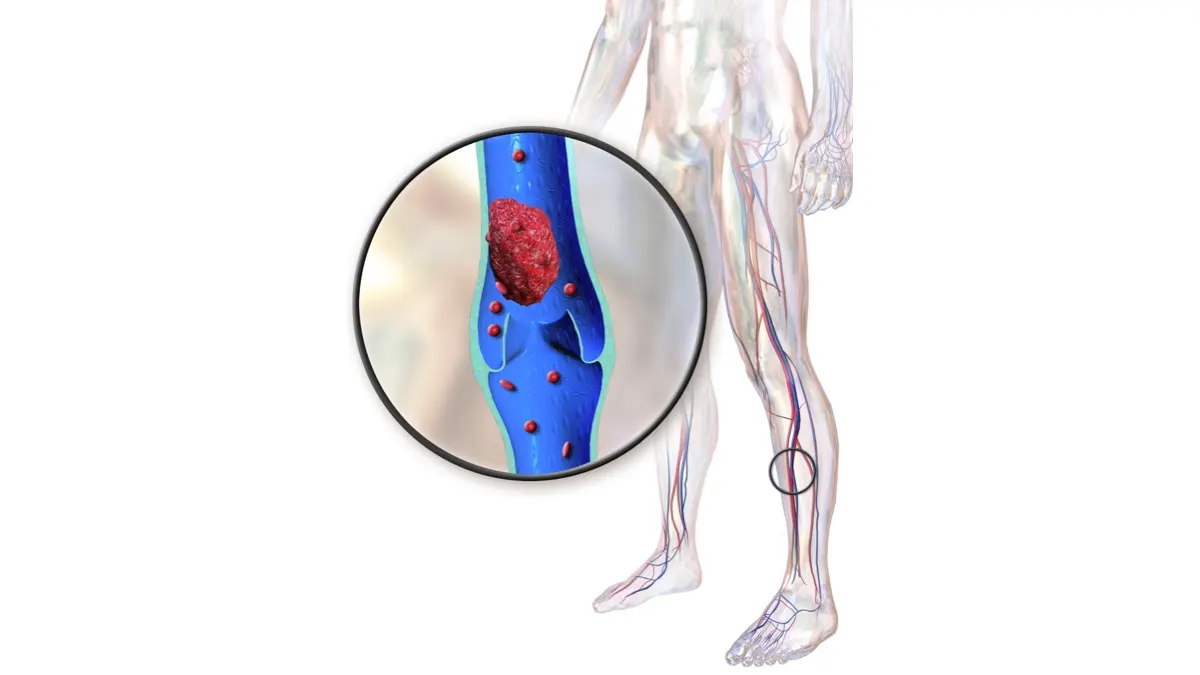
- Deep vein thrombosis (DVT). This is a clot that forms inside a deep vein, usually in the calf or thigh. See deep vein thrombosis for symptoms and causes.
- Pulmonary embolism (PE). A clot that has travelled to the arteries of the lungs. See pulmonary embolism and how dangerous a pulmonary embolism is.
This page gives the big picture. Details of each condition live on their own pages, so you will not find a full DVT guide here.
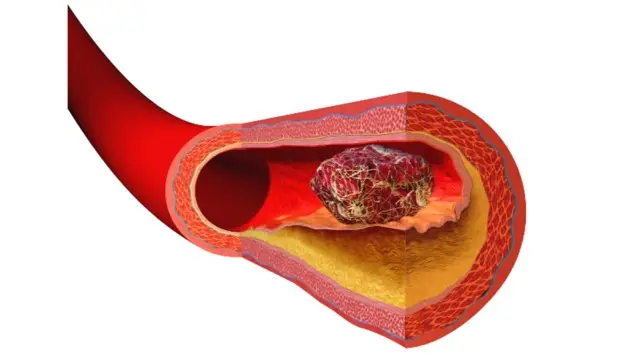
Venous thrombus and vein thrombosis
A venous thrombus is simply a blood clot in a vein. Vein thrombosis is the process of that clot forming. The location matters:
- Deep vein thrombosis sits in veins deep within the muscles. This is the type that carries the risk of a clot travelling to the lungs.
- Superficial vein thrombosis sits in veins just under the skin and causes a red, tender, hard cord. It is usually less dangerous but needs checking, because it can sometimes spread or occur together with a deep clot. See phlebitis.
Clots in veins are different from clots in arteries, which can cause heart attacks and strokes. For an overview of both, see blood clots explained.
Who is at risk of VTE?
VTE can affect anyone, but several situations raise the chance. Risk often builds when more than one factor is present.
- Surgery and hospital stays, especially major operations on the hips, knees, abdomen or pelvis, and long periods in bed
- Injury, particularly a broken leg, a cast or a leg that cannot move
- Cancer and some cancer treatments
- Pregnancy and the weeks after delivery
- Medicines containing oestrogen, such as some contraceptive pills and hormone therapy
- A previous clot or a close family history of clots
- Older age, obesity and smoking
- Long-distance travel with little movement, mostly in people who also have other risks
- Inherited or acquired clotting disorders, which are less common
Having a risk factor does not mean you will definitely have a clot. Many people with risk factors never do, and some clots occur without a clear cause. In Singapore, hospitals routinely assess surgical and admitted patients for clot risk and may use preventive measures such as early walking, stockings or medicines.
Symptoms to watch for
Symptoms depend on whether the clot is in the leg or the lung.
Possible DVT signs: swelling, usually in one leg, with pain or tenderness, warmth, and red or dark skin. Some people have mild or no symptoms. See blood clot in leg symptoms.
Possible PE signs: sudden breathlessness, chest pain that is worse when breathing in, cough (sometimes with blood), a fast heartbeat, light-headedness or collapse.
You cannot diagnose these yourself, and the signs can be mistaken for other conditions such as muscle strain or infection. That is why a prompt medical assessment matters.
How is VTE treated?
VTE is treatable. Treatment is usually with medicines called anticoagulants, often described as blood thinners, prescribed and monitored by a doctor. They do not dissolve the clot directly but stop it growing and give the body time to break it down. The choice of medicine and how long to take it depend on the person, so it is a decision for your treating doctor. For more, see DVT treatment and pulmonary embolism treatment. Be aware that some herbal and traditional remedies can interact with blood thinners; tell your doctor or pharmacist about everything you take. Natural remedies cannot replace treatment, as explained in can you dissolve blood clots naturally?
Preventing VTE
Prevention depends on your situation.
- In hospital: you may be asked to walk early, wear compression stockings, use leg pumps or take preventive medicines. These are decided by your care team after a risk check. Mention any previous clot, cancer, pregnancy or hormone medicines.
- At home: keep active, avoid sitting for hours without moving, stay hydrated, do not smoke, and maintain a healthy weight.
- Travelling: walk around when you can on long trips, flex your ankles in your seat, and talk to your doctor beforehand if you have a high-risk history.
- Stockings: compression stockings are used in selected cases. See compression stockings for blood clots.
More tips are in how to prevent DVT.
When to see a doctor
Call 995 immediately if you suddenly develop chest pain, trouble breathing, a racing heartbeat, or you cough up blood or feel faint. These can signal a pulmonary embolism.
See a doctor the same day if you have a swollen, painful, warm or discoloured leg, particularly one leg only, or if symptoms follow surgery, injury, a long trip, cancer or pregnancy. If you cannot be seen quickly, go to an emergency department.
Speak to your doctor before surgery, pregnancy, long travel or starting hormone medicines if you have had a clot or have a family history of clots. For long-standing leg aches or visible veins, try our vein symptom check and see find a vein specialist. Terms are explained in the glossary.
Frequently asked questions
What does VTE stand for?
VTE stands for venous thromboembolism. It is the umbrella term for a blood clot forming in a vein (venous thrombus) and, in some cases, travelling to the lungs.
Is VTE the same as DVT?
Not exactly. DVT is one form of VTE. The other is pulmonary embolism. VTE covers both, because they are linked: most pulmonary emboli begin as a clot in a leg vein.
What is a venous thrombus?
It is a blood clot that forms inside a vein. When it forms in a deep vein, it is called deep vein thrombosis. A clot just under the skin is a superficial vein thrombosis.
Can VTE come back?
It can. Some people have a higher chance of another clot, depending on the cause of the first one. Your doctor will advise how long to continue treatment and what to do in future high-risk situations.
Do I need a scan or blood test for VTE?
Doctors usually decide based on your symptoms and risk factors. Tests can include a blood test (D-dimer) and an ultrasound of the leg or a scan of the chest. A doctor must assess this; it cannot be judged at home.
Sources and further reading
This article is general information, not personal medical advice. Please speak to a doctor about your own symptoms. How we create our content.