Pelvic congestion syndrome (PCS) is a condition in which veins in the lower abdomen and pelvis become enlarged and do not drain blood properly, leading to long-lasting pelvic pain. It is sometimes dismissed or missed for years, partly because the pain has many other possible causes. This page explains what it is, who gets it, how it is diagnosed and what the outlook is. It is educational and cannot diagnose you.
What is pelvic congestion syndrome?
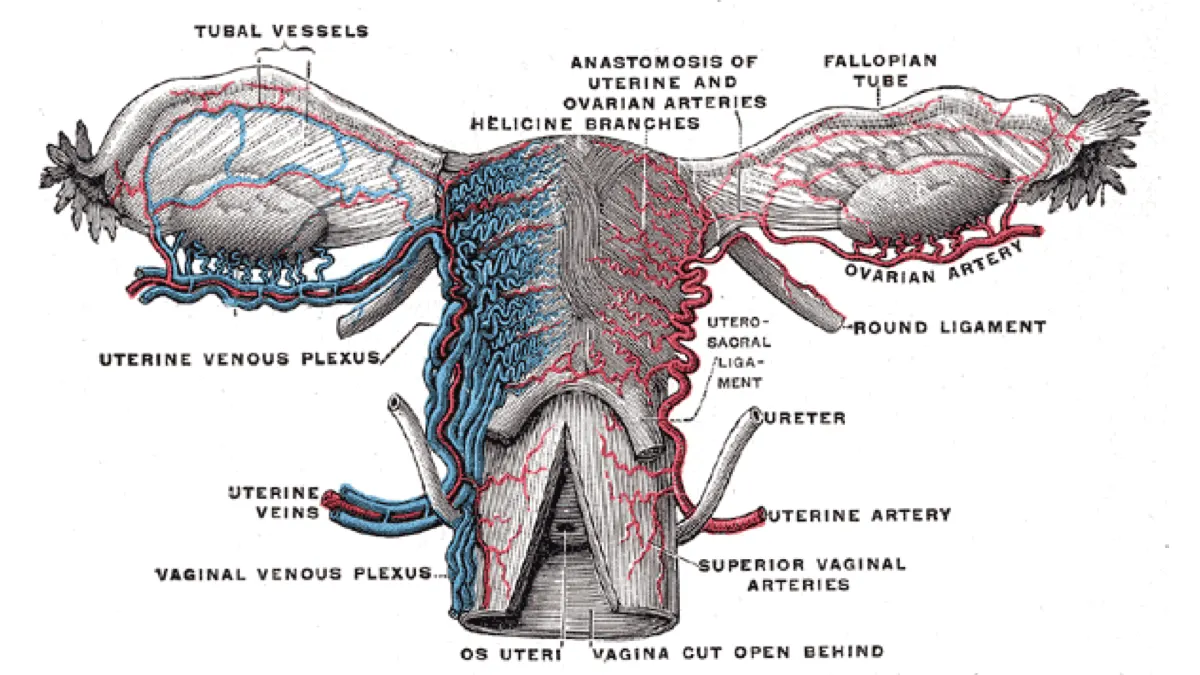
Think of it as a pelvic version of varicose veins. The veins that drain the ovaries and the pelvic organs contain one-way valves, like leg veins. If those valves fail, blood flows backwards and pools, and the veins stretch and twist. The result is pressure and pain deep in the pelvis.
Doctors now often use the broader term pelvic venous disorders, and you may also see pelvic venous congestion syndrome used for the same problem. The condition is thought to be more common than recognised, though firm figures are hard to find because diagnosis is difficult.
Pelvic congestion syndrome symptoms
Pelvic congestion syndrome symptoms vary from person to person. The typical picture is:
- Chronic pelvic pain lasting more than six months, usually a dull ache or heaviness, sometimes sharp
- Pain that builds up through the day and is worse after standing or walking for long periods
- Relief when lying down
- Pain during or after sex
- Worse discomfort before or during periods
- Bladder urgency or lower back ache
- Visible varicose veins on the vulva, buttocks or upper thighs, or varicose veins in the legs that return after treatment
None of these symptoms is unique to PCS. Many other problems cause pelvic pain, which is why a careful medical review is needed.
What causes pelvic congestion syndrome?
The exact trigger is not fully understood, but several factors are linked to what causes pelvic congestion syndrome:
- Faulty valves in the ovarian veins or the veins of the pelvis, allowing blood to flow backwards
- Pregnancy, especially several pregnancies. Higher blood volume, hormonal changes and the pressure of the womb can stretch and weaken pelvic veins
- Hormones, particularly oestrogen, which relaxes vein walls
- Narrowed veins elsewhere. Compression of the left renal vein (nutcracker syndrome) or the left iliac vein (May-Thurner syndrome) can raise pressure in the pelvic veins and contribute to symptoms
- Genetic tendency toward weak veins
It is most often described in women of reproductive age who have had children, but not everyone fits this pattern.
Pelvic venous insufficiency and leg veins
Pelvic venous insufficiency can connect to veins in the legs. Blood pooling in the pelvis can feed varicose veins that appear in the groin, vulva or thighs and then spread down the leg. This is one reason varicose veins sometimes come back after leg treatment: the source is in the pelvis. If you have leg varicose veins with chronic pelvic pain, mention both to your doctor. See also varicose veins.
How is it diagnosed?
Diagnosis begins with a history and examination, and usually involves ruling out other causes such as endometriosis, fibroids, ovarian cysts, infection, bowel and bladder conditions. Imaging is the key to finding enlarged pelvic veins:
- Pelvic ultrasound, sometimes with a transvaginal scan, can show dilated veins and slow or reversed blood flow
- CT or MRI scans with contrast can map the veins and look for narrowing elsewhere
- Venography, where dye is injected into the veins during a minimally invasive procedure, is the most detailed test and can be combined with treatment
Because the imaging findings and the symptoms do not always match, doctors consider the whole picture before diagnosing PCS. Evidence quality for diagnosis and treatment is still developing, so a specialist assessment helps.
Is pelvic congestion syndrome serious?
Is pelvic congestion syndrome serious? For most people it is a quality-of-life problem rather than a danger to life. The pain can be persistent and affect work, intimacy, exercise and mental wellbeing, and that matters. The pelvic veins themselves rarely cause emergencies.
Can you die from pelvic congestion syndrome?
Directly, no: PCS is not known to be fatal and the veins do not typically rupture. However, pelvic pain has many causes, some serious. Sudden severe pain, heavy bleeding, fever or fainting always needs urgent evaluation. Separately, any pelvic or leg vein problem can occasionally be linked to blood clots, so chest pain or sudden breathlessness must be treated as an emergency. See deep vein thrombosis for the warning signs.
Treatment options in outline
Treatment is individual, and your specialist will explain the options that suit you. Approaches that may be considered include:
- Pain relief and lifestyle measures, such as avoiding long periods of standing
- Hormonal medicines to reduce vein symptoms, with variable results
- Embolisation, a minimally invasive procedure in which a catheter is passed through a vein and the faulty pelvic veins are blocked with coils or a sclerosing agent
- Treating a related narrowed vein, where one is found
- Treatment of any associated leg varicose veins
Studies report symptom improvement in many people after embolisation, but trial quality is mixed, so be wary of any source promising a guaranteed cure.
When to see a doctor
Call 995 immediately for sudden severe abdominal or pelvic pain with fainting, very heavy vaginal bleeding, sudden shortness of breath, chest pain or coughing up blood.
See a doctor promptly if you are pregnant or could be pregnant and have new pelvic pain, if you have fever with pelvic pain, or if you have swelling and pain in one leg.
Book a routine appointment if you have pelvic pain lasting more than a few weeks, pain that worsens through the day or after standing, pain with sex, or visible veins in the vulva, buttocks or thighs. A GP or gynaecologist can look for other causes, and a vascular specialist can assess pelvic veins; see find a vein specialist. Our vein symptom check covers leg symptoms, and the glossary explains the terms used here.
This page is educational and does not replace personal medical advice.
Frequently asked questions
Is pelvic congestion syndrome serious?
It is not dangerous in the sense of being life-threatening, but it can be a serious problem for daily life. Chronic pain can affect work, relationships and sleep. It is also treatable, so it is worth having assessed.
Can you die from pelvic congestion syndrome?
PCS itself is not known to be fatal. The enlarged pelvic veins do not usually burst. A separate concern is that some people with pelvic vein problems may also have clotting issues, which is why sudden breathlessness or chest pain must always be treated as an emergency.
Is pelvic congestion syndrome the same as endometriosis?
No, but the symptoms overlap and the two can coexist. Doctors usually check for other causes of pelvic pain, including gynaecological, bowel and bladder conditions, before settling on PCS.
Can men have pelvic venous problems?
Yes. In men, the equivalent problem involves the testicular veins (varicocele) and sometimes other pelvic veins, although PCS as usually described affects women, mostly those who have had children.
Sources and further reading
This article is general information, not personal medical advice. Please speak to a doctor about your own symptoms. How we create our content.