May-Thurner syndrome is a condition in which a vein in the pelvis is squeezed by an artery, slowing the flow of blood out of the leg. It is a recognised cause of unexplained left leg swelling and of blood clots in younger people, yet many people with the underlying anatomy never know they have it. This page explains what it is, what symptoms to look out for, how it is diagnosed and how it is treated. It is educational and cannot diagnose you.
What is May Thurner syndrome?
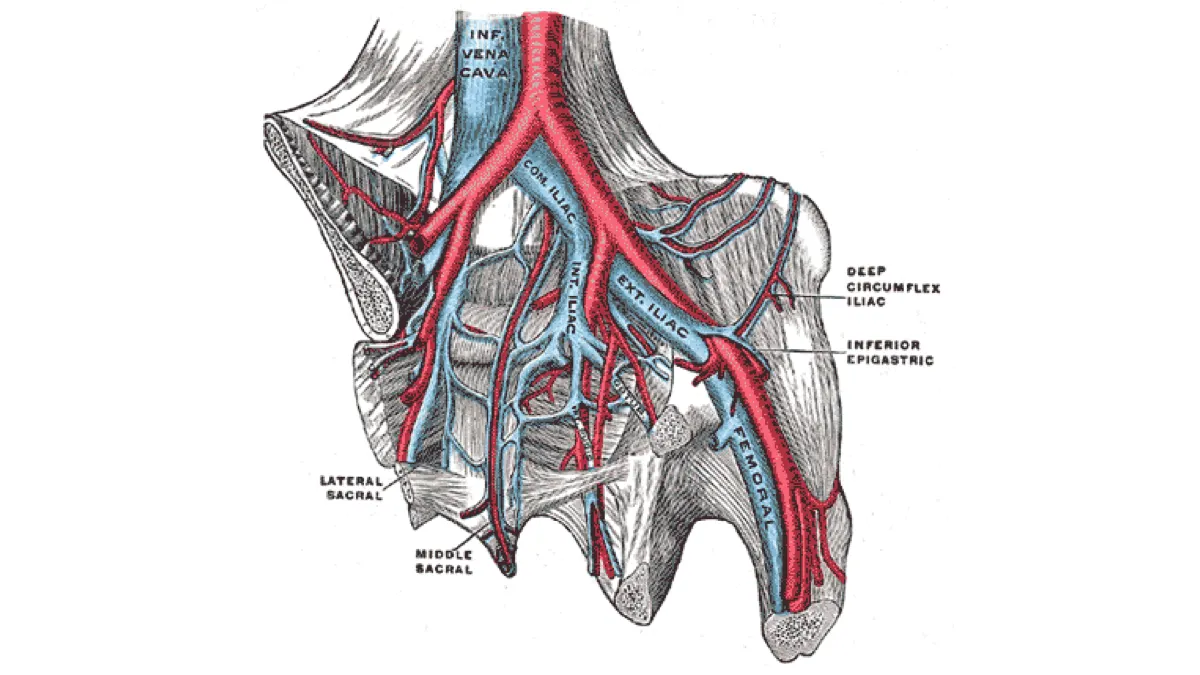
Deep in the pelvis, the right common iliac artery lies on top of the left common iliac vein, and both sit against the spine. In some people, this artery presses the vein against the spine and the vein becomes narrowed or develops scar-like bands inside it. This is also called iliac vein compression syndrome.
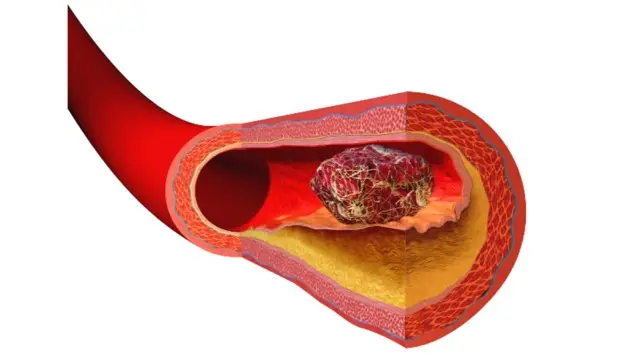
Blood leaving the left leg has to pass through this pinch point. When the narrowing is significant, pressure builds up in the leg veins, and the risk of a clot in the veins rises.
Research suggests that a degree of iliac vein compression is common in the general population, so may-thurner syndrome is best thought of as compression that causes problems, rather than anatomy alone. It is more commonly diagnosed in women, often between the ages of 20 and 40, though men and older people can be affected.
May Thurner syndrome symptoms
May Thurner syndrome symptoms depend on how severe the narrowing is. Many people have none. When symptoms occur, they usually affect the left leg:
- Swelling of the left leg, often the whole leg rather than just the ankle
- Aching, heaviness or tightness that gets worse through the day or after standing
- Pain with walking in some people (venous claudication)
- Varicose veins, sometimes in unusual places such as the groin, lower abdomen or pelvis
- Skin changes such as darkening, eczema or, in longer-standing cases, ulcers near the ankle
- Pelvic pain, in some people, linked to enlarged pelvic veins (see pelvic congestion syndrome)
The clot connection
The most important complication is a deep vein thrombosis in the left leg, often extending high into the thigh and pelvis. Sudden swelling, pain, warmth or colour change in the left leg can be the first sign. Learn the warning signs in blood clot in leg symptoms and the background in deep vein thrombosis.
How is it diagnosed?
Because the problem lies in the pelvis, a standard leg scan can miss it. Doctors may suspect May-Thurner syndrome when someone has left leg swelling or a left-sided clot without a clear cause, particularly if they are younger. Tests include:
- Duplex ultrasound of the leg veins, which can show a clot or abnormal flow
- CT or MRI venography, which shows the compression
- Venography with intravascular ultrasound (IVUS), where a thin catheter measures the narrowing from inside the vein. This is often the most accurate test and can be done alongside treatment
Imaging showing compression does not always mean it is causing symptoms, so specialists weigh scan findings against your symptoms.
Treatment overview
Treatment depends on whether you have a clot, how severe your symptoms are and what the scans show.
- Observation. If the compression is found by chance and causes no symptoms, treatment is usually not needed. Your doctor may advise staying active and discussing preventive steps before surgery or long journeys.
- Anticoagulants (blood thinners). If a clot is present, these are the first step. See deep vein thrombosis treatment.
- Clot removal. For a large recent clot, specialist centres may use catheter-based clot dissolving or removal to clear the vein.
- Stenting. After the clot is treated, or in people with symptoms from the narrowing alone, the vein can be opened.
- Compression stockings. May help symptom relief in some cases.
May Thurner syndrome stent: what to know
A May Thurner syndrome stent is a small flexible mesh tube placed inside the narrowed vein to hold it open. The procedure is minimally invasive: a catheter is passed through a vein, often at the back of the knee or in the groin, a balloon widens the vein, and the stent is deployed. It is usually done under local or general anaesthesia, and many people go home within a day.
What the evidence suggests:
- Stents generally relieve swelling and pain and improve blood flow in many people with obstructed iliac veins
- Stents specifically designed for veins are now available, and results are generally encouraging in the medium term
- Long-term data, especially over decades, are still limited, and trial evidence is mostly from non-randomised studies
- Blood thinners are commonly continued for a period afterwards, and follow-up scans are needed to check the stent stays open
- Risks include stent narrowing or blockage, stent movement, clots, bleeding and, rarely, injury to nearby structures
Not everyone with compression needs or benefits from a stent. The decision is individual and best made with a vascular specialist who treats these conditions regularly.
May-Thurner syndrome life expectancy
Many people ask about May-Thurner syndrome life expectancy. May-Thurner syndrome is not regarded as a condition that shortens life on its own. The outlook is shaped mainly by clot risk: a clot that is found and treated promptly generally does well, whereas a clot that travels to the lungs is dangerous. Some people also develop long-term leg swelling and discomfort (post-thrombotic syndrome), which affects quality of life more than lifespan. Because good long-term research is limited, avoid relying on any single figure, and ask your own doctor.
Living with May-Thurner syndrome
Practical points that are commonly discussed with patients include keeping active, avoiding long periods of sitting, staying hydrated, maintaining a healthy weight, and flagging the diagnosis to doctors before surgery, long travel, pregnancy or starting hormone-containing medicines such as the contraceptive pill, because oestrogen raises clot risk further.
When to see a doctor
Call 995 immediately for sudden shortness of breath, chest pain, coughing up blood, fainting or a racing heart. These may be signs of a clot in the lungs.
Seek urgent same-day care for a sudden swollen, painful, warm or discoloured leg, especially the left, or for new leg pain after surgery, injury, a long trip or starting hormone medicines.
See a doctor if you have long-lasting left leg swelling or heaviness, unexplained varicose veins in the left leg or groin, skin changes near the ankle, or a past clot without a clear cause. A vascular or vein specialist can arrange the right scans; see find a vein specialist. You can also try our vein symptom check or read about varicose veins. Unfamiliar terms are explained in the glossary.
This page is educational and does not replace personal medical advice.
Frequently asked questions
Is May-Thurner syndrome dangerous?
The narrowing itself is often harmless. The main risk is a blood clot in the left leg, which can be serious if it travels to the lungs. Many people live normally with the anatomy once it is recognised and managed appropriately.
What is May-Thurner syndrome life expectancy?
May-Thurner syndrome is not generally considered to shorten life when it is recognised and managed. The outlook depends mainly on whether blood clots occur and how well they are treated. Reliable long-term numbers are limited, so your own specialist is the best person to discuss your outlook.
Do all people with May-Thurner syndrome need a stent?
No. A stent is usually considered only for people with symptoms, a clot linked to the narrowing, or significant signs of venous obstruction. It is typically placed after any clot has been treated, and blood thinners are often continued afterwards.
Can May-Thurner syndrome affect the right leg?
It is much less common but possible. The classic pattern is the left side because of the way the right iliac artery crosses the left iliac vein.
Sources and further reading
This article is general information, not personal medical advice. Please speak to a doctor about your own symptoms. How we create our content.